Part 1: Linguistic Foreground
Part 2: The Chinese Problem
Part 3: Past Efforts to Simplify
Part 4: Catical Pīnyīn (Bóyǔ 帛語)
Friday, December 30, 2005
Chinese Made Simple(r)? - Part 4
Last time, in part 3, I discussed the flaws in mainland China’s efforts to simplify and pīnyīnize China. Now it’s time for me to discuss my own modest ideas in the way of rectifying these flaws.
Although I do propose a ‘solution’ (or a proposal in the direction of a solution) to the ‘Chinese problem’, I must make it clear that I believe the problem is over-inflated if it adverts to two extraneous issues. First, my proposal pertains to nothing more than Chinese script. I, unlike some of my friends here, have no illusions Chinese ‘cannot survive in the modern world’, or that it just ‘can’t express complex, new ideas’. Nonsense. Chinese is a durable language and will have no problem absorbing, as well as producing, new concepts in step with world developments. However, what I *do* agree the Chinese language cannot survive is its own written format. I have no pretensions of converting Chinese into Sino-Esperanto (as in Philip K. Dick did, mutatis mutandis, in _Blade Runner_), nor into some Chinglish proto-global-language. I want Chinese to remain what it is semantically and syntactically, but I do believe it can and should develop past what it is
Second, I think such a ‘solution’ is necessary only as long as China says it should be. To think a thought, let’s assume my system (or anything like it) becomes de rigueur in China. Should students stop learning traditional Chinese? By no means! I intend my system to be a sort of advanced pidgin (i.e., a commerce or function-niche language). Business people, politicians, scholars, etc. could and would learn it, while they and everyone else would still know traditional Chinese. Two benefits of my proposal are 1) it would remove the need for the half-solution-no-solution that is jiǎntǐzì-fication and 2) it would simultaneously give foreigners a doorway into China’s ‘Great Wall’ and the Chinese a way out to the workaday world that has no time or interest in learning ‘all those funny symbols’. As far as Mandarin learners are concerned, my system (‘Buy now, pay later!’) solves two competing problems. One is the need to learn lots of Mandarin phonetically (e.g., just what can jīngzhì mean?). The other is the need to ‘crack’ characters based on their radicals. But, as I learned early on, studying radicals in isolation is not only boring, but also mostly useless for phonetic learning, since the radicals rarely influence a character’s pronunciation in a consistent fashion. On the other hand, focusing as heavily as I did on phonetic Mandarin kept me ignorant of the illuminating written patterns radicals can provide. In my system, however, by learning the radicals in tandem with whole characters’ pronunciation, foreigners and students can achieve both goals simultaneously. Being forced to know the radicals, without also having to slog through the characters, even in their simplified forms, both saves the beginning learner time and equips him to analyze characters with the radicals as he progresses to learning characters.
Enough preface. My idea stands on a combination of the three linguistic modes I discussed earlier (vocal, orthographical and communicative) and Hànǚ pīnyīn. The first step would be to reduce or ‘denature’ all Chinese script into a few key category-radicals (à la the key amino acids of protein-life). These could be things like ‘person’, ‘implement’, ‘food’, ‘fluid’, ‘structure’, ‘breath’, ‘feelings’, ‘action’, etc. These would become, or perhaps simply tidy up, the radicals as we now have them. The ‘caticals’, as I shall henceforth call them, would correspond to the fundamental layers, or domains of reality which we use and try to teach to children all the time (what do you think separate lesson topics are for?). Of course, I admit a perhaps simpler, less abstract method would be just to use any character’s already given radical. Hence, rather than debating whether ‘grieve’ (shǐbēishāng, 使悲傷) is an active action, a passive action or a feeling, we could just retain the radicals, hence, 亻shǐ 忄bēi 亻shāng.
The second step would be to convert all words into, yes, pīnyīn. Why? Because China, and the world with it, is already laying a huge foundation for pīnyīn. Why fight it? Let it flourish. As I said, pīnyīn is better for English-speakers breaching ‘the Great Wall’ and simultaneously better for the Chinese to learn as bridge into the English alphabet. In fact, in the off chance a computer program didn’t automatically add pīnyīn’s tone markers (which you’ve seen over the letter in this post), I’d even be so magnanimous as to incorporate the Yale (?) technique of writing the tones as numbers next to the transliterated Chinese. It’s ugly and nerdy-looking (‘Wǒ yào chī fàn.’), but extremely efficient.
Now, if you’ve paid attention, you’ll quickly see why step two leaves us in a hard spot. If all the words are pīnyīn, how do we get out of the nightmarish ‘homophone maze’ that is Chinese? Simple, step three: add the appropriate caticals to the pīnyīn and they would immediately fall into cognitive place. For example, hearing, or reading, shī by itself in pīnyīn could mean ‘moist, damp’, ‘poem’, ‘lose’, ‘execute, do’, ‘lion’, ‘corpse’, or ‘hiss’. But with the caticals snugly in place? Moist becomes ‘fluid-shī’, poem becomes ‘speech-shī’, lose becomes ‘[passive?] action-shī’, execute becomes ‘[active?] action-shī’, lion becomes ‘animal-shī’ and hiss ‘breath-shī’ (水shī, 言[讠simplified] shī, 宀shī, 扌shī, etc.). For the sake of aesthetics and space usage, you could even fit the pīnyīn into (sometimes slightly expanded) overhanging, underlying or enclosing radicals (e.g., 丶, 亠, 冂, 凵, 勹, 厂, 囗, 宀, 廴, etc.).
In English, I call it ‘Catical Pīnyīn’ (CP). In Chinese, I call it Bóyǔ (帛語 ‘Bó language’), based as it is on the thinking of a man whose Chinese surname is Bó.
CP is, if I’m not mistaken, similar to Japan’s Kangxi (Kanji) system, insofar as it uses both Chinese characters (and their rudiments) and phonetic ‘letters’. Well and good. I’m glad I may be in the step with the mind of Japan (...wait, no, on second thought–!). Notice this system, which I’ll henceforth call ‘CP’, does not compromise spoken Mandarin (or any other Chinese dialect, for that matter). It is still up to the student to learn to hear and speak Chinese. The benefit of CP, then, is to level the learning field so that learning written Chinese (a true endeavor) is only slightly harder than learning spoken Chinese (a relative snap).
Recall our detour into the world of Chinese dictionaries. How can CP help this, um, dynamic feature of Chinese? First, since the pīnyīn makes it obvious, there is no guessing at the pronunciation of a word, which you may have seen in passing or which may obstruct your progress in reading a text. Second, since CP expects them to learn each word’s radical, students are comfortable locating words in the radical index. Ideally, they learn the radical counts cold and then just jump them for any number of words that radical may find itself in. Third, remembering radicals’ stroke counts (which go no higher than seventeen, and that for only one radical) is far easier than tabulating every random character’s stroke count. Basically, CP recognizes and works according to a fundamental reality of Chinese: radicals are essential. (Perhaps you recall the bei1 example I discussed in part 2.) They are the seed of all Chinese and, to this day, even simplified characters aim to preserve them. CP simply lets radicals have the influence they should in any proper understanding of Chinese.
Let me also make it clear that CP is not intended to replace Hànyǔ pīnyīn. CP is not an all-purpose commerce language; as I say, Hànyǔ pīnyīn takes the cake in that field. My system is principally an academic, didactic language, an academic pidgin if you will. Chinese students learning CP simultaneously learn pīnyīn and the radicals needed to master their own language as they mature. In turn, CP allows non-natives 1) to communicate in a market setting, 2) to be most easily understand in all written cases of communication and 3) also gives them a leg up into ‘real Chinese’ if they will or must ultimately learn it. A final benefit of CP is that, by being clear enough for outsiders and ideographic enough (vis a vis radicals) for Chinese, the system allows the Chinese to continue using fántǐzì. As it stands, on the one hand, simplification is too much work for Chinese students, while on the other hand, pīnyīn is too little support for non-native students of Chinese.
Now, since I’m willing to admit fragments of ambiguity will almost certainly remain CP, we must finally advert to the third mode of language, communicative semantics, for a way out. Since, generally, the only people who deal with individual characters, in isolation from the clarity of communicative semantics, are students, and since they encounter these isolated words *in* reference books, there is only a miniscule risk real users of CP will be confused by ambiguity. As soon as any catical homophone is read in conjunction with its communicative ‘partners’, it will immediately be clear which catical is being used (recall the ‘bat/bat’ example).
While I have called this system ‘my’ proposal, I am happily aware numerous other people may have already proposed it and found it inadequate or may even now be pushing it to the highest levels of Red Chinadom. I’d love to learn more about linguists, scholars, etc. pursuing, perhaps even opposing, ideas similar to CP. As always, I welcome your questions, suggestions, corrections and charitable rejoinders.
Although I do propose a ‘solution’ (or a proposal in the direction of a solution) to the ‘Chinese problem’, I must make it clear that I believe the problem is over-inflated if it adverts to two extraneous issues. First, my proposal pertains to nothing more than Chinese script. I, unlike some of my friends here, have no illusions Chinese ‘cannot survive in the modern world’, or that it just ‘can’t express complex, new ideas’. Nonsense. Chinese is a durable language and will have no problem absorbing, as well as producing, new concepts in step with world developments. However, what I *do* agree the Chinese language cannot survive is its own written format. I have no pretensions of converting Chinese into Sino-Esperanto (as in Philip K. Dick did, mutatis mutandis, in _Blade Runner_), nor into some Chinglish proto-global-language. I want Chinese to remain what it is semantically and syntactically, but I do believe it can and should develop past what it is
Second, I think such a ‘solution’ is necessary only as long as China says it should be. To think a thought, let’s assume my system (or anything like it) becomes de rigueur in China. Should students stop learning traditional Chinese? By no means! I intend my system to be a sort of advanced pidgin (i.e., a commerce or function-niche language). Business people, politicians, scholars, etc. could and would learn it, while they and everyone else would still know traditional Chinese. Two benefits of my proposal are 1) it would remove the need for the half-solution-no-solution that is jiǎntǐzì-fication and 2) it would simultaneously give foreigners a doorway into China’s ‘Great Wall’ and the Chinese a way out to the workaday world that has no time or interest in learning ‘all those funny symbols’. As far as Mandarin learners are concerned, my system (‘Buy now, pay later!’) solves two competing problems. One is the need to learn lots of Mandarin phonetically (e.g., just what can jīngzhì mean?). The other is the need to ‘crack’ characters based on their radicals. But, as I learned early on, studying radicals in isolation is not only boring, but also mostly useless for phonetic learning, since the radicals rarely influence a character’s pronunciation in a consistent fashion. On the other hand, focusing as heavily as I did on phonetic Mandarin kept me ignorant of the illuminating written patterns radicals can provide. In my system, however, by learning the radicals in tandem with whole characters’ pronunciation, foreigners and students can achieve both goals simultaneously. Being forced to know the radicals, without also having to slog through the characters, even in their simplified forms, both saves the beginning learner time and equips him to analyze characters with the radicals as he progresses to learning characters.
Enough preface. My idea stands on a combination of the three linguistic modes I discussed earlier (vocal, orthographical and communicative) and Hànǚ pīnyīn. The first step would be to reduce or ‘denature’ all Chinese script into a few key category-radicals (à la the key amino acids of protein-life). These could be things like ‘person’, ‘implement’, ‘food’, ‘fluid’, ‘structure’, ‘breath’, ‘feelings’, ‘action’, etc. These would become, or perhaps simply tidy up, the radicals as we now have them. The ‘caticals’, as I shall henceforth call them, would correspond to the fundamental layers, or domains of reality which we use and try to teach to children all the time (what do you think separate lesson topics are for?). Of course, I admit a perhaps simpler, less abstract method would be just to use any character’s already given radical. Hence, rather than debating whether ‘grieve’ (shǐbēishāng, 使悲傷) is an active action, a passive action or a feeling, we could just retain the radicals, hence, 亻shǐ 忄bēi 亻shāng.
The second step would be to convert all words into, yes, pīnyīn. Why? Because China, and the world with it, is already laying a huge foundation for pīnyīn. Why fight it? Let it flourish. As I said, pīnyīn is better for English-speakers breaching ‘the Great Wall’ and simultaneously better for the Chinese to learn as bridge into the English alphabet. In fact, in the off chance a computer program didn’t automatically add pīnyīn’s tone markers (which you’ve seen over the letter in this post), I’d even be so magnanimous as to incorporate the Yale (?) technique of writing the tones as numbers next to the transliterated Chinese. It’s ugly and nerdy-looking (‘Wǒ yào chī fàn.’), but extremely efficient.
Now, if you’ve paid attention, you’ll quickly see why step two leaves us in a hard spot. If all the words are pīnyīn, how do we get out of the nightmarish ‘homophone maze’ that is Chinese? Simple, step three: add the appropriate caticals to the pīnyīn and they would immediately fall into cognitive place. For example, hearing, or reading, shī by itself in pīnyīn could mean ‘moist, damp’, ‘poem’, ‘lose’, ‘execute, do’, ‘lion’, ‘corpse’, or ‘hiss’. But with the caticals snugly in place? Moist becomes ‘fluid-shī’, poem becomes ‘speech-shī’, lose becomes ‘[passive?] action-shī’, execute becomes ‘[active?] action-shī’, lion becomes ‘animal-shī’ and hiss ‘breath-shī’ (水shī, 言[讠simplified] shī, 宀shī, 扌shī, etc.). For the sake of aesthetics and space usage, you could even fit the pīnyīn into (sometimes slightly expanded) overhanging, underlying or enclosing radicals (e.g., 丶, 亠, 冂, 凵, 勹, 厂, 囗, 宀, 廴, etc.).
In English, I call it ‘Catical Pīnyīn’ (CP). In Chinese, I call it Bóyǔ (帛語 ‘Bó language’), based as it is on the thinking of a man whose Chinese surname is Bó.
CP is, if I’m not mistaken, similar to Japan’s Kangxi (Kanji) system, insofar as it uses both Chinese characters (and their rudiments) and phonetic ‘letters’. Well and good. I’m glad I may be in the step with the mind of Japan (...wait, no, on second thought–!). Notice this system, which I’ll henceforth call ‘CP’, does not compromise spoken Mandarin (or any other Chinese dialect, for that matter). It is still up to the student to learn to hear and speak Chinese. The benefit of CP, then, is to level the learning field so that learning written Chinese (a true endeavor) is only slightly harder than learning spoken Chinese (a relative snap).
Recall our detour into the world of Chinese dictionaries. How can CP help this, um, dynamic feature of Chinese? First, since the pīnyīn makes it obvious, there is no guessing at the pronunciation of a word, which you may have seen in passing or which may obstruct your progress in reading a text. Second, since CP expects them to learn each word’s radical, students are comfortable locating words in the radical index. Ideally, they learn the radical counts cold and then just jump them for any number of words that radical may find itself in. Third, remembering radicals’ stroke counts (which go no higher than seventeen, and that for only one radical) is far easier than tabulating every random character’s stroke count. Basically, CP recognizes and works according to a fundamental reality of Chinese: radicals are essential. (Perhaps you recall the bei1 example I discussed in part 2.) They are the seed of all Chinese and, to this day, even simplified characters aim to preserve them. CP simply lets radicals have the influence they should in any proper understanding of Chinese.
Let me also make it clear that CP is not intended to replace Hànyǔ pīnyīn. CP is not an all-purpose commerce language; as I say, Hànyǔ pīnyīn takes the cake in that field. My system is principally an academic, didactic language, an academic pidgin if you will. Chinese students learning CP simultaneously learn pīnyīn and the radicals needed to master their own language as they mature. In turn, CP allows non-natives 1) to communicate in a market setting, 2) to be most easily understand in all written cases of communication and 3) also gives them a leg up into ‘real Chinese’ if they will or must ultimately learn it. A final benefit of CP is that, by being clear enough for outsiders and ideographic enough (vis a vis radicals) for Chinese, the system allows the Chinese to continue using fántǐzì. As it stands, on the one hand, simplification is too much work for Chinese students, while on the other hand, pīnyīn is too little support for non-native students of Chinese.
Now, since I’m willing to admit fragments of ambiguity will almost certainly remain CP, we must finally advert to the third mode of language, communicative semantics, for a way out. Since, generally, the only people who deal with individual characters, in isolation from the clarity of communicative semantics, are students, and since they encounter these isolated words *in* reference books, there is only a miniscule risk real users of CP will be confused by ambiguity. As soon as any catical homophone is read in conjunction with its communicative ‘partners’, it will immediately be clear which catical is being used (recall the ‘bat/bat’ example).
While I have called this system ‘my’ proposal, I am happily aware numerous other people may have already proposed it and found it inadequate or may even now be pushing it to the highest levels of Red Chinadom. I’d love to learn more about linguists, scholars, etc. pursuing, perhaps even opposing, ideas similar to CP. As always, I welcome your questions, suggestions, corrections and charitable rejoinders.

Wednesday, December 28, 2005
Resource links for FCA
BIBLE
Search or Browse the RSV Bible
(Old and New Testaments, with the Deuterocanonicals & Apocrypha)
CATECHISM
Catechism of the Catholic Church
Roman (Tridentine) Catechism
Daily Roman Missal
Being Catholic
EWTN'S Massive Document Index
Ecumenical Councils and Decrees
The Cogitator's patristic florilegium on the Bishop of Rome as the successor of Peter, head of the Apostles
the Summa Theologiae
Canon Law
PRAYER
Daily Byzantine Catholic Prayer & Lectionary
Living Tradition (daily quotes)
Holy Icons and Sacred Music
Catholic Liturgical Library
LANGUAGE & WORLD
Slang Dictionary and Urban Dictionary
Etymology of Sayings & Phrases
Travellin' Light
中文.com (www.zhongwen.com)

FCA's TO DO List
Search or Browse the RSV Bible
(Old and New Testaments, with the Deuterocanonicals & Apocrypha)
CATECHISM
Catechism of the Catholic Church
Roman (Tridentine) Catechism
Daily Roman Missal
Being Catholic
EWTN'S Massive Document Index
Ecumenical Councils and Decrees
The Cogitator's patristic florilegium on the Bishop of Rome as the successor of Peter, head of the Apostles
the Summa Theologiae
Canon Law
PRAYER
Daily Byzantine Catholic Prayer & Lectionary
Living Tradition (daily quotes)
Holy Icons and Sacred Music
Catholic Liturgical Library
LANGUAGE & WORLD
Slang Dictionary and Urban Dictionary
Etymology of Sayings & Phrases
Travellin' Light
中文.com (www.zhongwen.com)
FCA's TO DO List
Roller coasters, nausea, hydrophilia, creation and more
[The following is a longish narrative essay from an insanely longer post I from my Xanga blog {8 May 2004}. I always liked its bounding prolixity, but what triggered me to post it here is that I just mentioned my hyrdophilia in the post about Montana, Wyoming and Nebraska.]
In the past nine months I have picked up some slang and catch phrases from my roomie, Erick, I may never be able to shake: “I’ll allow it!” … “dumpy” … “I roxor the boxor” … “Don’t focus on the wrong part of the story” … “Don’t be ‘that guy’… You’re ‘that guy’, aren’t you?” and of course, the one, the only: “Punch it in.” But perhaps the most fitting Erickism to describe my life a few Saturdays ago (17 April 2004) is “weak sauce.” Yes, ladies and gentlemen, I am weak sauce.
Yesterday I and some friends went to Jian Hu Shan Fancy World, an amusement park conveniently located almost two hours outside of Taichung in the middle of nowhere.
 It was a cool, overcast day, with only five minutes of light rain when we first arrived about 10:00 AM. Fancy World was superior to any amusement park I’ve been to before for all the wrong reasons: it had a lush, rolling landscape, it was undercrowded and it was quite inexpensive. Predictably enough, Fancy World had its own cast of characters to guide and amuse you during your visit.
  First there is Hato KuKu and Hato KiKi, presumably a cartoon couple or siblings. Hato KuKu is, I quote the brochure, “a smart, cute little boy pigeon who loves challenges.” When I first looked at the brochure, I realized the biggest challenge for this little boy pigeon must be flight, since he has arms and fingers without wings and a rabbit’s bobtail and feet. Hato KiKi is a “lovely little girl pigeon who loves to say hello to everyone.”
  While she does have some tail feathers, the problem now is that KiKi looks like a yellow and black penguin with fingerless flippers, has thick duck feet and wears a fluffy crop of pink bangs. Fortunately, I looked inside the brochure and realized all this mad morphology – except for the pink bangs – is only part of some costumes.
  Then there’s FeFe, “a slow-moving horse who is extremely caring.” I think this is Jian Hu Shan’s way of saying he is the lonely, quite, stupid one. He’s on the brochure only once, and that, dressed as a dragon. And that’s I have to say about that.
 Next there are DuDu and CaCa. Yep, that's right: "do do" and "ka ka." DuDu is “a timid but curious little parrot who loves to walk around waving her little wings.”
 (It says quite a lot when the one of the most consistently used adjectives for amusement park characters is “little.” Are we going to assume they’re enormous? Are we going to like them more if we know how little they are and how little their body parts are?) Maybe it’s the ominous inscrutability of a parrot walking around aimlessly flapping its wings – like a caged bird going into apoplexy before a storm, or like one of those little toy-droids in Blade Runner that you know could snap and lunge at your crotch or kill any curious little, little child – maybe that’s what repels me about DoDo. Or maybe it’s just that stupid name. CaCa, on the other hand, seems as harmless as he is random: “a passionate and daring cakeman who wants to give you a big big hug.” A cakeman. A passionate cakeman. A passionate cakeman that wants to hug me. Excuse me?
As an aside, I’m sure it says something about the sense of human dignity in Taiwan that no live person was used to “be” any of these characters (except during some stage shows I’ve only seen on the webpage). There was no giant DuDu or CaCa for kids to hugs and punch and run from. All of Fancy World’s characters are fiberglass statues in all sorts of poses.
Now, finally, there is BoBo, “an ever-changing bubble who is full of ideas and loves to make people laugh.” He (?) has a body like an inverted snowman and has massive white eyes and what I think is a herpetic polyp on his head. BoBo is no less a mystery than his mates.
 Despite being touted an ever-changing bubble, in all three of his photos on the brochure, BoBo looks exactly the same. Same hand positions. Same posture. Same face. Same color. Is this supposed to be some kind of Buddhist riddle? Is BoBo a cartoon parable of the Heraclitean flux? Is he ever changing precisely by never changing? Is he one bubble precisely by being three bubbles with two arms and a face? All the same, if I had to pick – and as we walked around and around the fancy land, picking a favorite mysteriously became a burning priority for me – I’d choose BoBo. I think he reminded me of the little fly from Chip and Dale’s Rescue Rangers. Or maybe his head reminded me of a Clue game piece.
 Suffice it to say, I have a sneaking suspicion that Fancy World’s cast of animal characters just won’t burrow into the global pop-consciousness like Mickey, Minnie, Donald Duck and Goofy all have. Speaking of Goofy, let me re-open an ancient question: what is Goofy? I know Goofy’s “supposed to be” a dog – but then what is Pluto? If Goofy’s a dog, who’s his master? Where’s his collar? Where’s his doghouse? As smart as he is, Penny’s dog, Brain, still has a collar and can’t speak human. If he is a dog, Goofy is some kind of irresistibly stupid and affable Überhund (“oober dog,” for the attentive non-German-speaker): erect, dressed, literate, verbally intelligible, employed, capable of driving and shopping, an uncle. Sure, Scooby Doo can stand up; but otherwise he’s a blubbering idiot with a pothead owner. (“Here boy, fetch the doobie! Come on, boy, fetch! Fetch Shaggy’s roach clip! … Good boy! … Ffffsssssshhh! Gooooooood doggie. Whoa, totally check out that mummy. Mmmmmmummy. Yaaaah. Hunh heh, Daphney’s hhhhot.”) If I’m stuck in the county well someday, or trapped in a tenement fire, I, without a second thought, will take a buck-toothed, shuffling, klutzy man-dog over some clever barking little actor-pooch. Better yet, send me Goofy’s gifted little nephews. Or at least Mr. Ed.
Honestly, when you consider everything we know about Goofy – not to mention what unknowns we can imagine – he’s incalculably more useful than Lassie or Benjy. Goofy is so far above any other cartoon- or TV-dog that he defies being called one. Goofy is for the cartoon world what Chewbacca is for the sci-fi world. Neither is human – but can we really say either is a dog?
At any rate, I didn’t go to Fancy World for the characters (and certainly not for DoDo the pirate parrot.) I went for the rides. In other words, I went to get sick. I did my best to maximize my vulnerability. I got only about 4 hours of sleep Thursday and Friday nights. I had a small, cold breakfast with cranberry juice. Now, as I said, I’m weak sauce. But I’m not a total wimp. In fact, I really like rollercoasters. I like to speed and the rocking unpredictability. I like free falls and screaming hydraulic boosts into the air. I like swirling around in wild waters. But I cannot, at all, for any amount of time, handle spinning. I am weak sauce.
Things were fine before lunch. We first rode the G5. I guess calling it the G5 is more exciting than calling it what it really is: the G1. The G5 consists of a wide, two-bench car that climbs to about 100 meters, pauses at 45 degrees over a sheer drop, suddenly zooms down into a tunnel, shoots back up into a brief right twist and then quickly stops on a horizontal docking track. (Maybe the 5 G’s came at the upward loop, but I wasn’t counting.) It was pretty solid. [These guys, apparently, thought it was f---g awesome!!! CAUTION: Turn down your volume to avoid the waves of cussing through the whole video.] The lines were so short that we went again.
Then we went on the Floorless Rider, or some other floorless thing. This was pretty much a Batman ride. It could have been a lot faster, but it had a couple good loops and one jagged yank near the end. It took a little time to decide what we wanted to do next. During the downtime I witnessed what I can only “yellow trash.” (ACLU Alert!) Tattoos, cigarettes, loud, open-mouthed laughter and slurred jokes. Tanktops, bloodshot eyes, men clinging like aimless heroes to braless women in tube tops. It was just like the fauna at a U.S. amusement park, only in Chinese, and with less facial hair.
For lunch I further weakened my sauce by scarfing a greasy fried chicken-mayo-shredded- cabbage-and-ketchup sandwich fries and a coke for lunch. Seeing the Fancy World feeding pond could not have helped. This pond was a biological nightmare. It was clean enough, I suppose. It was well built and had a nice garden by it. No, the nightmare came from beneath the water. I am hesitant to say the fish were the problem, since as far as I could tell there were no fishes in the pond. There was only a single large, twitching, slimy bundle of fish-mass that sucked with a hundred mouths at any and every fish pellet people sprinkled in. Goldfish are pretty dumb to begin with in my book. But this was a new low. This was nothing more than a shimmering, frenzied mouth with eyes and fins floating in water. At the first sign of food – which is nearly constant since there are no restrictions on who can feed the fish or how much they can eat – the floating mouth snaps into brainless action. The water suddenly becomes a frothy green vortex of fish mouths tirelessly popping out and open and closed, while thick fish bodies slide and flop over the whole mash in a desperate effort to get that one fish pellet that is never there. It was a truly disgusting sight. But it makes good business sense. People pay the park to feed the fish and I’m sure the overfeeding keeps the population in check.
Soon after lunch we went on the Poseidon (sounds fishy, right?). The Poseidon is just one of those big boat cars that rolls back and forth like a huge pendulum. (Anhkhoa would have loved the pirate motif. Dyaarrrgh!) I guess it was having my guts punched up on every down swoop, but it kind of made me sick and woozy. Janet and Vivian were too full to go on the Inverter, but I was all about it. As Carrie and I stood in line – with a whopping four other people – she got cold feet. The Inverter is a side-mounted pendulum ride that adds a vertically rotating car. The arm rotates clockwise while the car itself stops, reverse, releases, stops, spins forward, stops, reverses, etc. They wouldn’t let us on for a while since maybe the machine was cooling down or they had to wait for more people – ha! I wanted to ride it, but Janet and Carrie wanted to ride the Flying Saucer instead. I was feeling self-destructive and I wanted to keep up the team camaraderie, so I caved and walked onto the Saucer with about twenty other people. (Vivian got the Not-Idiot Award for the day by not riding what she knew would be terrible.) The Saucer is a horizontally spinning platform attached in the middle to a giant metal sawhorse by a massive pendulum arm. I had seen this beast running earlier and knew I was doomed. But I had the apathy of the damned. I took my seat. I looked at my fellow riders. I assessed my stomach. (What would come out first? The chicken? The coke? The fries? Who would get a face-full?) We began rocking back and forth. Then we began spinning. I clamped my eyes shut. We swung higher. We spun faster. Carrie began laughing. I began huffing and puffing. Between her non-stop laughter, Carrie kept shouting to me and Janet, “It’s better if you close your eyes! Hahahaha! Oh my gosh! Hahaha! It’s not so bad if you close your eyes! Hahaha!” Twice, maybe three times, I opened my eyes. I saw Dante’s Inferno. I closed my eyes and kept hyperventilating and moaning. My food climbed higher and higher in my stomach, stirring and sloshing like a greasy, peptic smoothie. My fingers began tingling from my hyperventilation. I literally had to swallow back my gag one time. If I had not, I would have chunk-sprayed the saucer.
But I made it. We stopped spinning. We stopped swinging. I stumbled off the Saucer to a nearby bench and almost spewed again when I lied on my back.
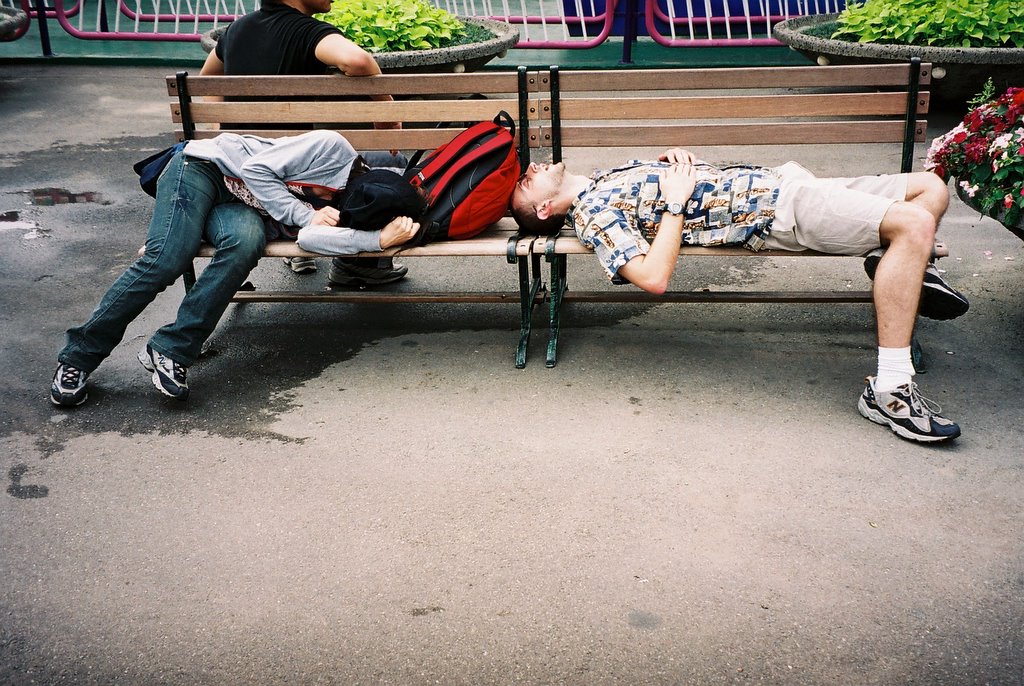 I recalled my EMS training and turned on my right side so as to keep my stomach contents in the antrum away from the twitchy pyloric sphincter into my esophagus. (Medical Tip #1: If someone you know ever drinks too much, lay them on their left side so as to keep the alcohol from absorbing into the greater surface area of the antrum, as well as to irritate the pyloric sphincter enough so the person pukes up the booze.) The ladies wanted to go into the shade, but I almost hurled again when I stood up. They left me to lie and groan. Eventually I got up and found them by a snack bar. I needed ice. (Medical tip #2: Cold water and ice on a person’s forehead suppresses the gag reflex.) I had to buy a slushy since the entire park apparently lacks ice outside of the sodas. We sat and then washed our faces with cold water. I was pretty much done for the rest of the day. In fact, I got sick again just watching the ladies ride their last two machines. Like I said, I am weak sauce. But at least I got my money’s worth.
 I started to feel better only when I took Carrie’s advice and drank a Sprite. (“Yeah, if there’s a problem, just put more stuff in my stomach,” I said.) A few good burps later, I felt less queasy. Just in time too. After all the rides we went to a water show. Philistine that I am, I was expecting a bunch of dancers or swimmers to be splashing around and singing for thirty minutes. Fortunately not. It was much more elegant. Forget the fact that I was surrounded by children in a sub-par theater filled to quarter capacity. Forget the fact that I had just been ready to vomit. Forget the fact that I wasn’t “doing anything productive.” Forget all that; I did; and that made the difference. The water show was the peak of the day for me. I’m not sure why. The whole show was pretty short. The music – divided into six rudely connected “movements” of totally different genres – was only occasionally enjoyable. The whole show was pretty short. It helped that I took off my glasses. The water blurred together into a kind of musical miniature aurora borealis. It was enchanting. It was soothing. It was very nearly sublime. And because it was all those things, the experience is a bit baffling.
Why was I so moved by choreographed bursts of water? Some of it surely must be that I lived almost my whole life in Jacksonville, a city bisected by one of the largest rivers in the USA, and cushioned on the east by the Atlantic Ocean. As a child, when I read the kids’ book, The Five Chinese Brothers, I always envied the brother that could hold the ocean in his mouth. The other brothers could not be killed. Well and good. But that one ocean-gulping brother could explore. Hallelujah! He could lay bare the tomb of the world, the ocean.
I’ve always liked water. As a child, I would spend hours sloshing around in the pool, making small tsunamis with my hand, batting at water towers that jumped up in the wake of a fallen tennis ball, plunging my hand down to make sucking vacuums. As a rower, I spent countless hours of my life gliding above the water in a shell of fiber glass, dreaming about my oar entering the water, about our bow nodding in and out of the after as we raced. I once seriously considered joining the U.S. Merchant Marines to serve my country – on the ocean. I nearly served with the Mercy Ships to serve God – on the ocean. I love drinking water. I love seeing water. I love feeling water. I also love releasing water. I am truly a hydrophilic person. Why? Whence this desire? The answer is bigger than me and my past.
There is something elementally beautiful, something primally attractive, for humans about water, especially when it’s in motion. Water, especially flowing water, is one of the richest symbols in all of human history. The Bible, for example, is literally overflowing with water imagery. One of God’s first acts of total sovereignty as the Creator was to subjugate and separate the waters of chaos. For the ancient Jews, water – cold, impenetrable, raging water – was the apotheosis of doom.
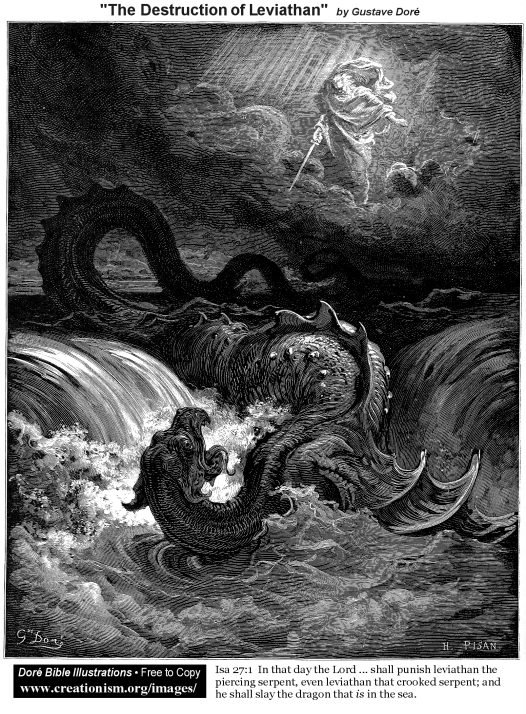 (Good to read Job, the Psalms and the Prophets with that in mind.) There is something simultaneously magical and scientific about water. It is, even from a strict biophysical perspective, a masterpiece of fluidity and cohesion, adaptation and permanence. Water bulges and spreads, but never easily leaves itself behind. Water slithers up a tree’s phloem like a headless serpent, all the while dragging itself behind in a linkless chain of hydrophilic tension.
 The sky may be vast and seductive, but it is a shell compared to the dense vitality of the ocean. The ancient Greeks knew this. Hence they crowded the vacuous heavenly Olympus with gods but left the stolid sea to Poseidon alone. The sea did not need only one god over it; rather, it tolerated only one. The sky is tempting because we hope to enter it by our own choice and effort. The ocean is terrifying – and thus tempting – because we can fall into it at any moment. The sky welcomes us; the oceans swallows us. Entering the sky is one of humans’ highest hopes; leaving it once there is sure plummeting doom. Entering the ocean is a lethal risk every time; being released from it is a symbol of hope. Icarus, you’ll recall, did not fall up into the sky, but down from the sky into the sea.
The sky is quite literally for the birds. The ocean, neither outer nor inner space, is our last frontier. The sea is two-faced, and that’s why we like it. Careful! You can get lost in the ocean. Good news! You can get lost in the ocean. In its mystery and sheer unspoken power, nothing compares to so much water gathered into that one place called the ocean. The Titanic was such a nightmare precisely because one of modern humankind’s greatest toys was sunk by the sea. The sky did not destroy the Hindenberg, but the ocean destroyed the Titanic.
Human culture, like human neurology, is wet. And if you ask the last fifty years of biologists, they’ll tell you culture is but evolution in a distinctly human key – evolution put to music, so to speak. On more than one level they are wrong; but it’s what they’ll tell you nonetheless. Depending what cosmogenic view you take, our attraction to water could be a result of the centrality of water in the development and preservation of biological life. Or it could be a sublime spiritual affinity placed in us by God as part of His self-testimony in nature. I’m inclined to say it’s both. Water is life and human life is the playing field – or, too often, the battlefield – for the image of God in us.

Water is beautiful because it is simple. Water is simple because it is humble. And water is humble because it is powerful. Water both reminds us of our murky demise and fills us with the hope of life. Water is not divine, but it can point us to divinity. Indeed, on its own, no one thing points us to God. As Philip Yancey notes in his sometime discussions of the brutal mechanisms of nature, nature, when analyzed as distinct phenomena, may in fact point us away from God. But when appreciated together, life points to a Lifegiver; the story, to paraphrase G.K. Chesterton, cries out for a storyteller. To paraphrase that rotund Englishman again, I am not convinced of God’s existence by anything – but by everything.
Hence, water, seen as a supreme part of that totality called Creation, can and often does point us unmistakably to God. As only one example, it is completely fitting that the cover of Thomas Dubay’s The Evidential Power of Beauty (Ignatius, 1999) is adorned by the simple beauty of water.
We love water; we hate water. We know water all too well; we hardly know it at all. I see the same dual dynamic at work in our tireless interest in the spoken word. Taking an evolutionary or creative-evolutionary approach to biology, we congratulate babies and children so warmly for leaping linguistic hurdles because we know at some deep, ur-genetic sense that it is this ability, this skill, this power, more than almost any other, that separates us – potentially at least – from the instinctual gyre of the animal kingdom. Taking a more stringently “special creation” approach to life, we extol and indulge in the spoken word so passionately because it is one of the chief ways in which we share the image of God. Again, I’m inclined to affirm both. Ask any poet or theologian: to speak is to divine. Perhaps for me, to swim is too.
Movin' to Montana... soon?
Ever since hearing Frank Zappa's song in high school about the peregrinating dental floss tycoon, since reading Willa Cather's Nebraska-novel, _O Pioneers!_, and especially since drooling over my good buddy's pics and anecdotes from Wyoming, I have had an inexplicable, and inexplicably acute, hankering to live in Montana, Wyoming, or Nebraska, and in that order of preference. I've even taken a few longer than blinking looks at those states' big universities. (Grad school has to happen somewhere.) Something about the remoteness, the cold weather, the mountains, the forests and the echo of a Native American frontier world all draw me to the great central-northern states (why Idaho, North and South Dakota and Minnesota leave me cold, I don't know, but they do). I haven't ever visited them, ever, but these places, my “big three”, are profoundly beautiful to me, I think because they bespeak a kind of imperturbable majesty. They are, even more than our big cities, quintessentially USAmerican geography. Vast and abundant, stark and unbending, terrifying and sublime, both surreal and unsparingly real. These states are an ocean of land and therefore just as mysteriously alluring as the sea. (Did I mention I love water on many levels?)
I think I was taken with such beauty -- the beauty of vastness – during my bike tour through eastern Colorado and Kansas. Kansas was the most boring state I’ve ever seen, yet also one of the most beautiful. There is something like pure magic in seeing red, yellow and blue hunks of old combines studding miles and miles and miles of shimmering wheat. Natural cubism. Obviously, my big three aren’t flat or shimmering like Kansas, but they do have the same allure: to look and look and still see only more!
At any rate, I'd love to hear any readers' perceptions or experiences of my big three, or anything else in this post, for that matter, eh?
I think I was taken with such beauty -- the beauty of vastness – during my bike tour through eastern Colorado and Kansas. Kansas was the most boring state I’ve ever seen, yet also one of the most beautiful. There is something like pure magic in seeing red, yellow and blue hunks of old combines studding miles and miles and miles of shimmering wheat. Natural cubism. Obviously, my big three aren’t flat or shimmering like Kansas, but they do have the same allure: to look and look and still see only more!
At any rate, I'd love to hear any readers' perceptions or experiences of my big three, or anything else in this post, for that matter, eh?
Tuesday, December 27, 2005
New FCA Hero Day!
[Fr. Jaki has long been one of my favorites, but I didn't think to add him here till recently. Voila!]

-- Fr. Stanley L. Jaki, OSB (AD 1924--), holds doctorates in both theology and physics. The Hungarian-born priest moved to the USA in the 1950s where he then completed a PhD in theoretical physics at Fordham University. Since then, he has been a prolific lecturer and writer, particularly concerning the history of science and its surprisingly intimate connections to the Catholic worldview. Unquestionably on the pugnacious side, Jaki's witness, like that of most prophets, "hurts so good": his writings are historically dense and tightly argued and his staunch commitment to the Catholic Church of Christ is leaves no quarter for vapid secularism, much less for vapid theism.
Unfortunately, many of his works are usually very hard to find and most popular science authors, to their shame, simply seem to have no idea about Jaki's significant contributions (which is odd, considering his many prestigious accolades and lengthy CV). If ever there were a thinker who's time has not yet come, it is Jaki. Also an astute ecclesiologist and a leading Newmanist, Fr. Jaki is a hero of sorts for me, not only because he models academic and spiritual excellence in the examination of science, history and faith, but also because his book, The Savior of Science, played no small role in my entry into the Church.
Subscribe to:
Posts (Atom)